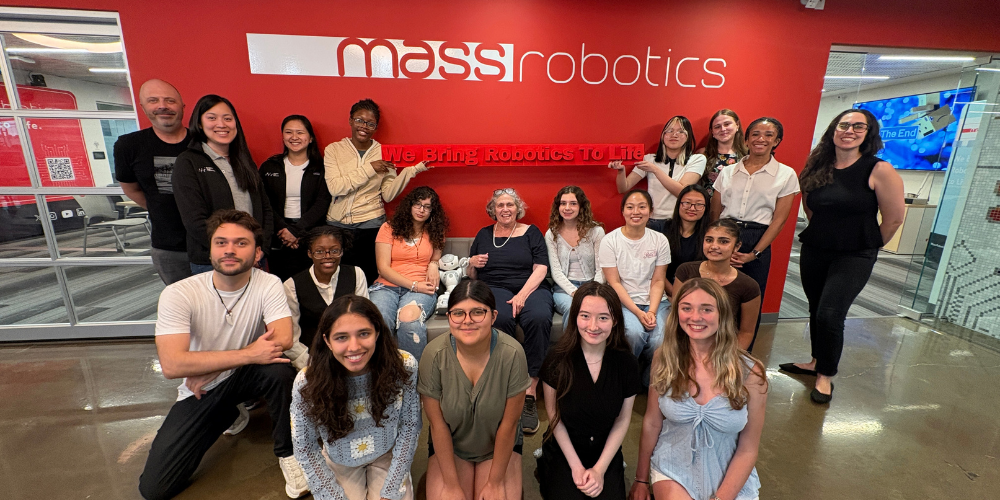
We are proud to celebrate the accomplishments of the MassRobotics Jumpstart Fellows. Our Cohort 6 students shared their internship experiences, showing the true impact of combining hands-on STEM education with industry mentorship and workplace opportunities. Their journeys reinforce our mission and demonstrate the lasting impact that dedicated mentors and forward-thinking companies can have when they invest in the next generation of robotics and technology leaders.
The MassRobotics Jumpstart Fellowship Program was created to provide diverse Massachusetts high school girls with opportunities to explore careers in robotics, engineering, and advanced manufacturing while helping build a stronger, more inclusive technology workforce. Through an intensive curriculum, professional mentorship, and paid summer internships, Fellows gain the technical skills, confidence, and industry connections needed to pursue future careers in STEM.
Program Highlights
From January through May 2026, Cohort 6 participated in an immersive program held every Saturday, along with a full week during February school vacation. Throughout the program, Fellows developed technical and professional skills through hands-on learning in:
- CAD design and SolidWorks
- Digital fabrication and manufacturing technologies
- Electronics, soldering, and embedded systems
- Programming and robotics applications
- Engineering design and problem-solving
- Professional development, networking, and workplace communication
Working alongside engineers, technicians, and industry professionals, Fellows built real-world technical experience while developing the collaboration, adaptability, and confidence that employers value.
From Trainings to Internships
During the summer of 2026, Fellows applied their skills through paid internships at leading Massachusetts technology and robotics companies. They contributed to meaningful engineering projects, gained firsthand experience in professional work environments, and formed lasting relationships with mentors across the industry.
At the conclusion of their internships, Fellows returned to MassRobotics to present their experiences to fellow students, alumni, mentors, families, and employer partners. Their presentations highlighted not only the technical skills they developed, but also the confidence, leadership, and professional growth they achieved throughout the summer.
The Power of Industry Partnership
Our industry partners provide far more than internships—they create impactful and practical learning experiences. They Jumpstart Fellows as valued members of their teams and help students envision themselves as future engineers, designers, programmers, and innovators. The mentorship, encouragement, and authentic workplace experiences they provide have a lasting influence on each Fellow’s educational and career journey.
We invite you to explore the stories shared by our Fellows and learn about the companies that made these experiences possible. Their reflections offer a firsthand look at the impact of mentorship, meaningful work, and opportunity.

GreenSight is a founding partner and collaborator of our Jumpstart program and has hosted multiple interns annually, including hiring returning interns from previous cohorts!! Greensight took four interns this summer.
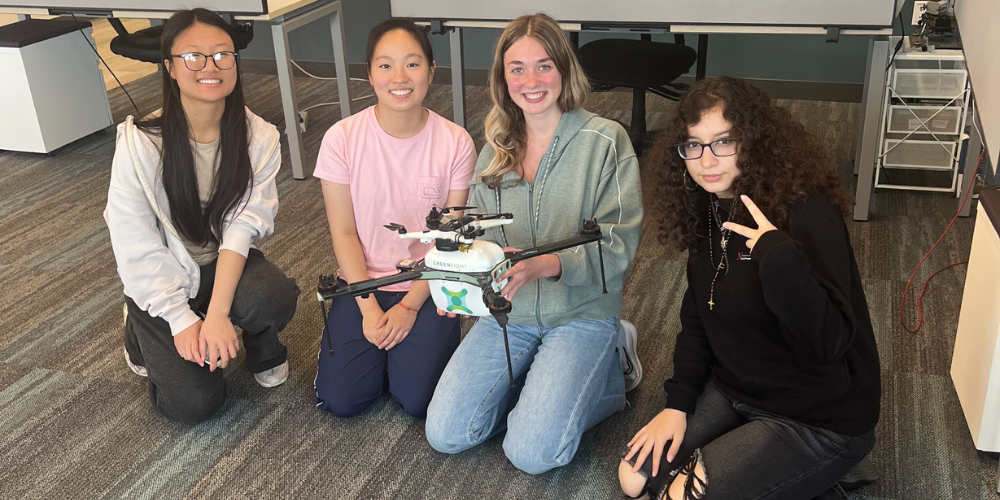
Lillia describes her experience,
“Over the course of these six weeks, I worked on all of the electrical components and embedded systems of our drones. I developed an OpenMV detection system for the drone where a camera would detect and box a bright red object and send commands to the drones to fly towards that object. Additionally, I worked with the drone PCB and altered its components. I also programmed and wired a Raspberry Pi Zero W that acted as the brain, developed a communication system between the user, mother drone, and smaller “joey” drones, and communicated between the camera and flight controller.

This experience has given me a lot of exposure to the professional engineering environment and the opportunity to make an impact in the engineering world. I’m also very grateful to have been able to collaborate with other individuals to help make this project a reality, interact with and learn from senior engineers, and familiarize myself with the various tools and skills to succeed in the field.”
Brenda shares,
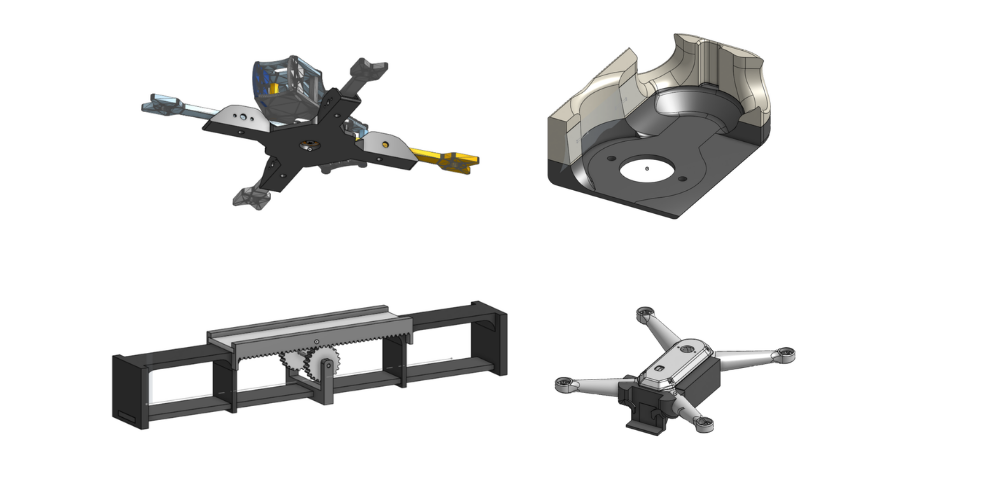
“Throughout this internship (so far), I have gained valuable, hands-on experience in 3D CAD design. I helped design the mounts for the WISP (tiny drone) and other small equipment, as well as a new gap cover for the WISP. I also designed a claw mechanism in CAD intended for the theoretical deployment of WISPs from a fixed-wing aircraft.

This opportunity has given me a sense of what mechanical engineering would be like in the real world and especially when it comes to learning about aerodynamics and applying concepts like manufacturing tolerances to my models. It significantly improved both my CAD and problem-solving skills. Overall, this internship has been an impactful experience, and I really value everything I’ve learned here.”
While Xintong, says,
“I was part of the mechanical team and worked on a lot of 3D modeling on CAD. It was definitely quite difficult to get used to all the constraints and rules of this CAD software at first, but I eventually learned how to use it through constantly refining and developing new mechanisms for our Jumpstart Aerial Marsupial Drone. I also understood how important it was to pay attention to every single little detail on my designs because everything I’m designing is tied to a whole interconnected system, and if one design doesn’t connect to the other mechanisms on the drone, the whole system would not work properly. Apart from this, I also got some insights into how engineering corporations operate.”
Ruby acknowledges that,
“During the six-week internship at GreenSight, I worked on a user interface (UI) that was to be connected to the drone’s camera on Mission Planner. This was done via Python and Command Prompt. There was also an attempt to replicate the previous year’s work in a multi-purpose multi-button UI, but because of the drastic differences in technology and websites being used, the code was inapplicable. I researched and learned about the processing and building of the Wisps and Dreamers alike.

This experience has given me a deep insight into drone and software work, something I can carry with me into the rest of my career. Seeing the meticulous thought process between even the laying of pieces was only a glimpse of the work ahead of me. There were a lot of fails, tears, and trials, but they were all pushes in learning more about what there is to improve on. I’m extremely grateful for my time here.”

WSP USA Inc. gains their reputation as a strategic, trusted, and diverse group of professionals through their globally recognized engineering and design services that not only support their company’s goal to “create positive, long-lasting impacts” on the communities they serve, but also demonstrate their commitment and acceptance of the people who depend on them.
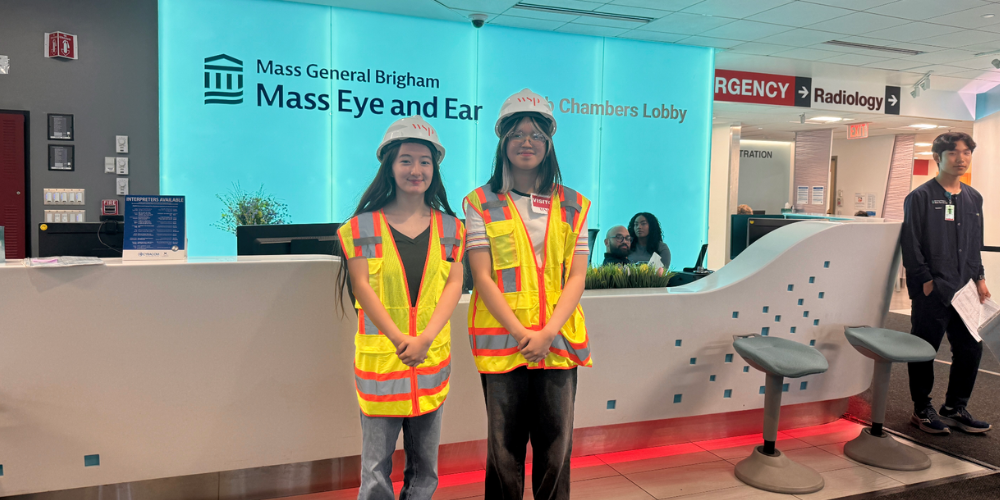
Alana shared her experience as:
“First of all, words can’t describe how amazing it has been interning at WSP so far; it truly is one of a kind. Most internships are focused on one discipline, but WSP has given me a chance to immerse myself in so many of the disciplines they have. At first, I thought I would be doing structural engineering every day, something that I had close to zero knowledge about, and I was a bit worried that I wouldn’t enjoy it. But I did. Every day, I joined different disciplines and learned about what they do. Not only did I get to learn what structural engineers have to go through, but I learned the mechanical and electrical engineers’ sides as well. I even got to learn about plumbing, built ecology, and fire safety. The learning experience was through many things such as hands-on measuring, shadowing meetings, site visiting, learning building codes, and using software I’ve never used before. This internship has been so impactful that I can’t really look at buildings the same way again without thinking things like “hm, this railing isn’t continuous; it’s a safety hazard.” It was extremely interesting to see how all these disciplines cross over and work with each other.”
Nhi shares that,
“Throughout my experience at WSP, I had the amazing opportunity to explore several different disciplines within the architecture, engineering, and construction industry. I learned what a day in the life looked like for a variety of engineers, such as structural, mechanical, electrical, plumbing, and civil, and I also learned about new fields I had never known about before, such as fire life safety and built ecology. During my internship, I learned how to use programs like Revit and AutoCAD, I sat in different team meetings, I visited multiple sites in various phases of construction, I combed through different building codes, and I received mentorship from so many great people. Overall, interning at WSP and discovering the behind-the-scenes of designing and constructing buildings and structures has made me appreciate how much effort goes into the smallest details all around us, and over the course of these 4 weeks, it has definitely made me consider a career in this industry.”

Formed in 2009 to facilitate and support the growth of the international fab lab network as well as the development of regional capacity-building organizations. The Fab Foundation is a US non-profit 501(c) 3 organization that emerged from MIT’s Center for Bits & Atoms Fab Lab Program.
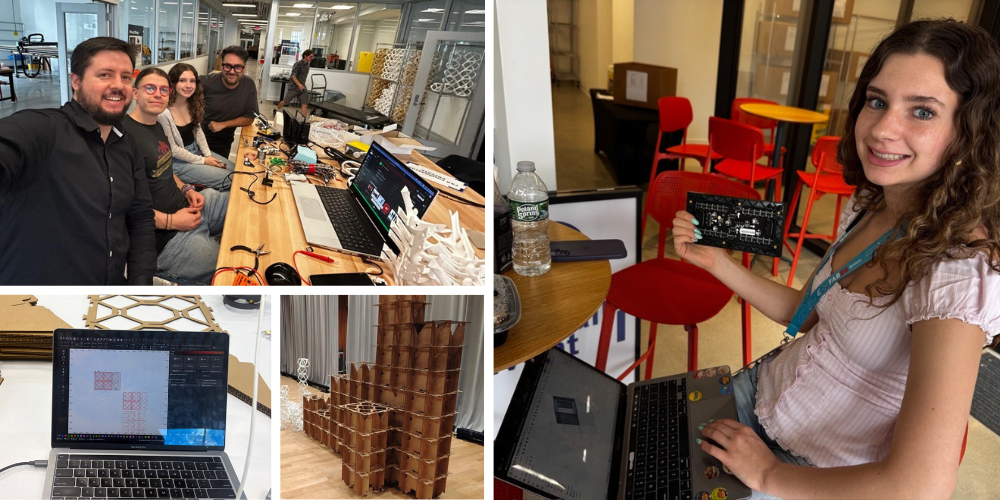
Ava could not be more excited to share her experience,
“My internship with the Fab Foundation during the summer was an experience that truly shaped my passion for engineering. I had the opportunity to learn, turn ideas into real prototypes, and see how innovation can make a meaningful difference to the world. It not only strengthened my technical skills, but also my confidence, curiosity, and excitement for engineering.”
AVA Robotics is a company that produces and manufactures intelligent robots used in various areas, including healthcare, education, manufacturing, retail, and finance. The company values teamwork, and employees collaborate regularly, whether to build something or solve an issue with the robot.

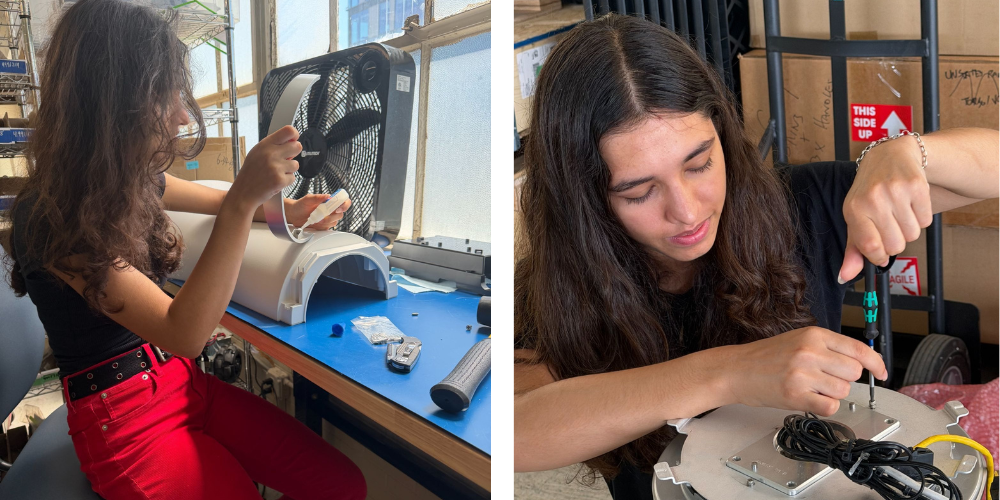
Sofia described,
“So far, my time as a Jumpstart Intern at AVA Robotics has introduced me to the process of building AVA Robotics’ telepresence robot. My responsibilities have included organizing and cleaning delicate components, labeling packaging boxes for robot parts, and assisting with the assembly of the robot’s exoskeleton by securing panels and magnets to the front and rear base skins.
I also assembled fully functional cables for two different systems that are essential to the robot’s operation, following both real-life examples and detailed assembly schematics. While organizing hardware, I gained experience with the metric and imperial measurement systems commonly used in engineering.
This internship has strengthened my ability to be flexible, learn new skills quickly, and adapt to a variety of tasks throughout the production process.”
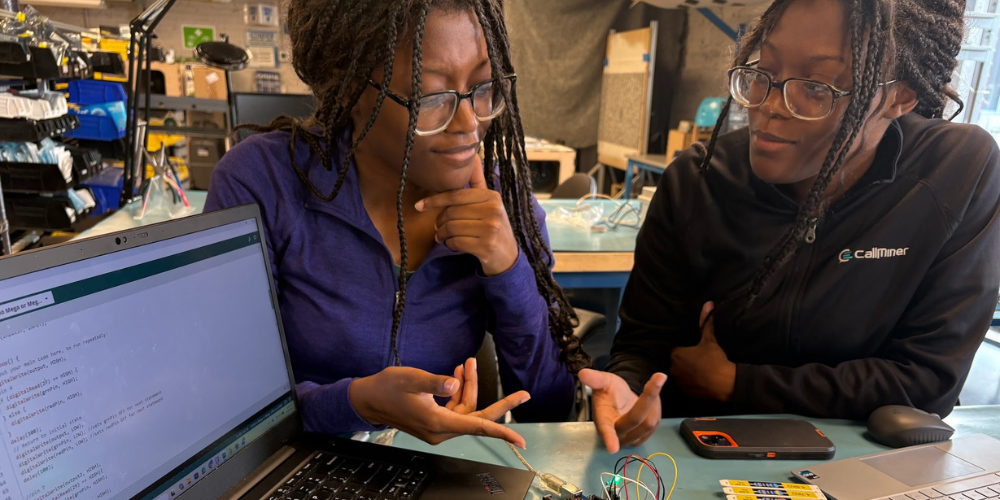
Anika’s time at AVA Robotics,
“…has involved assembly, maintenance, and shipping of our telepresence robots and robot parts. I’ve been taking care of crating the bots and sending them to customers, assembling and maintaining the robot skins and torso attachments, building cables that are integral to the robot’s function (70+!), and inventory. (Lots and lots of inventory…) Recently, I’ve been designing, CADding, and 3D printing custom parts so we can mount a gumball machine to our robot.
My experience at AVA has strengthened my problem-solving skills, adaptability, creative thinking, and communication skills.”

Piaggio Fast Forward (PFF) is a Boston-based robotics company founded in 2015 by the Piaggio Group. They create human-centric, autonomous cargo-carrying robots like Gita, Gitamini, and Kilo.
Chrisly mentioned,
“Interning at PFF opened up my eyes to the corporate life of engineering. From the get-go, I was immediately immersed in projects or tasks where I worked on soldering, planning out a project, or sketching. I was also granted the opportunity to participate in a MOCAP study that helped Kilo study human movement. My favorite part of this internship was getting a deep dive into how an engineer’s brain works as well as how they get from point A to point B.”

While Christelle said,
“While interning at Piaggio Fast Forward, I was able to engage in a number of new experiences from EE design to CAD software. I would say my favorite accomplishment here was creating my first PCB board and getting to assemble it through & through. Interning at this company allowed me to witness the unique lifestyle of being an engineer, whether that meant being at a desk or working hands-on with different departments through the course of the day. Other than that, the small events hosted at PFF also played a key role in shaping my overall understanding of what it’s like to be part of such a community.”

MagLev Aero is an aerospace startup based in Boston, Massachusetts, that develops a magnetic levitation electric propulsion platform for vertical take-off and landing (VTOL) aircraft. The company replaces traditional central-shaft turbine mechanics with circular rim-drive motors that magnetically levitate and spin rotor blades directly at their tips.

Nishtha states,
“During my time at MagLev Aero, I learned the side of corporate life and engineering. From the get-go, I was immersed in projects and tasks where I used the machine shop, CAD, 3D printing, or simply sketched possible solutions. I worked on designing a mold with a cooling system for a single-wound stator.”
To every company, mentor, and professional who supported our Fellows this year, thank you. Your commitment to developing young talent and expanding opportunities in STEM is helping shape a more innovative, equitable, and diverse future for the robotics industry.
We extend a special thank you to La Fondation Dassault Systèmes, whose continued support has driven the Jumpstart program’s success since its inception. By learning SolidWorks during the program, our students built a key technical foundation that helped them bring their designs to life. These skills also proved relevant to their their summer internships as well.
